End-of-Line Automation: What It Includes and Where to Start
Your production line isn’t truly running at capacity if finished products keep piling up at the end of it.
End-of-line automation can turn that final stretch into a consistent, connected process. It keeps products moving, reduces manual handling, and helps you get the full output your upstream equipment is capable of producing.
Byron Automation has designed and integrated end-of-line systems for manufacturers, food processors, and distribution operations facing complex product-handling, space, and throughput challenges.
In this guide, we’ll explain what end-of-line automation can include, how to identify the best place to start, and what it takes to build a system that delivers lasting productivity gains.
What Is End-of-Line Automation?
End-of-line automation covers the processes that move a finished product from production or primary packaging toward a completed load that’s ready for storage or shipment.
Exactly where the “end of line” begins depends on the operation. It may start with product inspection or secondary packaging. It may focus only on case handling and palletizing. In other facilities, it includes every step from product orientation through wrapping, labeling, and full-pallet movement.
An end-of-line project can automate one isolated task or connect several machines and processes into one coordinated system.
What Can End-of-Line Automation Include?
Product Inspection and Preparation
Before products can be packed, a system may need to verify, count, track, orient, or sort them. Machine vision and sensors can help determine what’s present, where it is, and what should happen next.
Secondary Packaging
Automation may erect cases, load products into trays or cases, close or seal packaging, and apply or verify labels. The best approach depends on the product, packaging materials, required rate, and frequency of changeovers.
Conveyance and Accumulation
Conveyors don’t simply move products between machines. They may also orient, space, merge, divert, accumulate, or buffer products so each part of the line receives what it needs at the right time.
Pallet and Load Handling
The final portion of the line may include empty-pallet handling, palletizing, dunnage, wrapping, labeling, completed-pallet conveyance, and interfaces with forklifts or mobile robots.
See our guide to robotic palletizing systems for more detail.
Not every operation needs all these functions. The goal is to automate the processes that meaningfully improve the performance of the complete line.
Where Should You Start?
1. Map the Current Process
Document what happens from the last production step to the point where the finished load leaves the area.
Include manual movements and decisions—not just machines. Note where products wait, accumulate, get reoriented, change hands, or require an operator to recover a fault. These handoffs often reveal opportunities that aren’t visible in production reports.
2. Identify the Actual Constraint
Look for the step that limits output, absorbs disproportionate labor, or regularly interrupts flow.
The constraint may be a slow machine, but it could also be inconsistent product presentation, insufficient accumulation, frequent changeovers, delayed pallet removal, or an operator who’s responsible for too many simultaneous tasks.
Ask what happens immediately before and after the apparent bottleneck. Automating one task may not improve total output if the surrounding processes can’t keep up.
3. Define the Required Future State
Design around where the operation is going, not only where it is today.
Document the required sustained and peak rates, operating schedule, SKU mix, staffing assumptions, and anticipated growth. Consider known product or package changes. If a new line, shift, or customer requirement is coming, the integrator needs to understand it before fixing the system around current conditions.
4. Examine Every Interface
End-of-line systems connect physical equipment, controls, people, and information.
The engineering team needs to understand how products arrive, how machines exchange signals, how operators manage recipes and faults, and how completed loads leave the cell. It also needs to account for maintenance access, utilities, safety systems, warehouse traffic, and existing equipment that must remain.
These interfaces are where individually capable machines can become an unreliable line.
5. Define and Test the Required Performance
Establish what successful performance means before the system is built.
Acceptance criteria may cover throughput, product variation, changeover time, package quality, fault recovery, and communication with other equipment. Testing should use representative products and packaging materials under realistic conditions.
The objective isn’t simply to prove that each component operates. It’s to verify that everything works together at the required production rate.
Should You Automate One Step or the Whole Line?
A focused project can be the right choice when one clearly defined process is limiting the operation and the surrounding equipment has enough capacity to support it.
A broader system approach becomes more important when several processes are tightly connected. For example, a faster case packer won’t increase output if the existing conveyor can’t create consistent product spacing. Automating palletizing may produce little benefit if completed pallets can’t leave the cell quickly enough.
Phased automation is also possible. The key is ensuring that the first phase supports the longer-term roadmap rather than becoming equipment that must be replaced when the next phase begins.
A capable integrator should help distinguish what needs to happen now from what the design should preserve for later.
What Information Does an Integrator Need?
You don’t have to design the solution before starting the conversation. You do need to explain the operation and the result you’re trying to achieve.
Useful inputs include:
- Product and packaging specifications
- Required, peak, and future production rates
- SKU mix and changeover expectations
- Existing-equipment and controls information
- Facility layout and operating conditions
- Current problems and acceptance criteria
Operators and maintenance personnel should also be involved early. They understand how the line behaves outside ideal conditions and what access, information, and recovery tools they’ll need after installation.
How Can You Reduce Deployment Risk?
Start by defining scope, responsibilities, interfaces, and performance expectations clearly. Ambiguity early in a project can become delay, rework, or disagreement later.
Design reviews should include operations, maintenance, engineering, safety, and other affected teams. The system should then be tested with real production materials and representative operating conditions before deployment.
Byron’s automation process includes mechanical, software, electrical, and safety reviews followed by live-product validation, corrections, and full-capacity acceptance testing. Testing the assembled system before it reaches the facility helps move problem-solving away from the production floor.
Deployment planning matters too. Installation, commissioning, training, and startup should be coordinated around the facility’s production needs, with a clear plan for post-installation support.
What Does Integrated End-of-Line Automation Look Like?
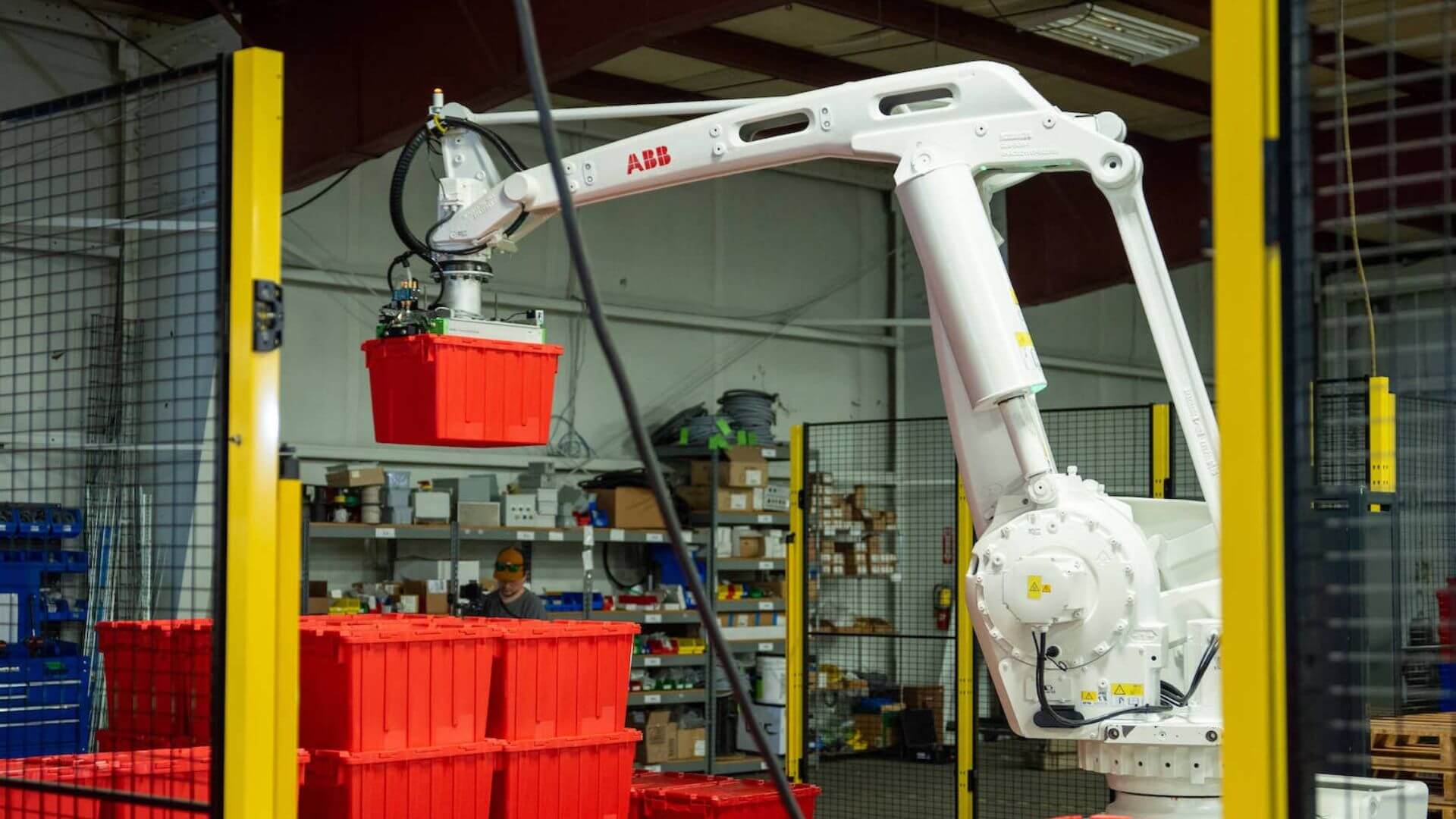
For a grocery fulfillment operation, Byron built a six-position robotic palletizing system that handles logistics totes within the existing fulfillment process. The application required more than placing totes on pallets; it had to coordinate several work orders, pallet handling, and the surrounding warehouse flow.
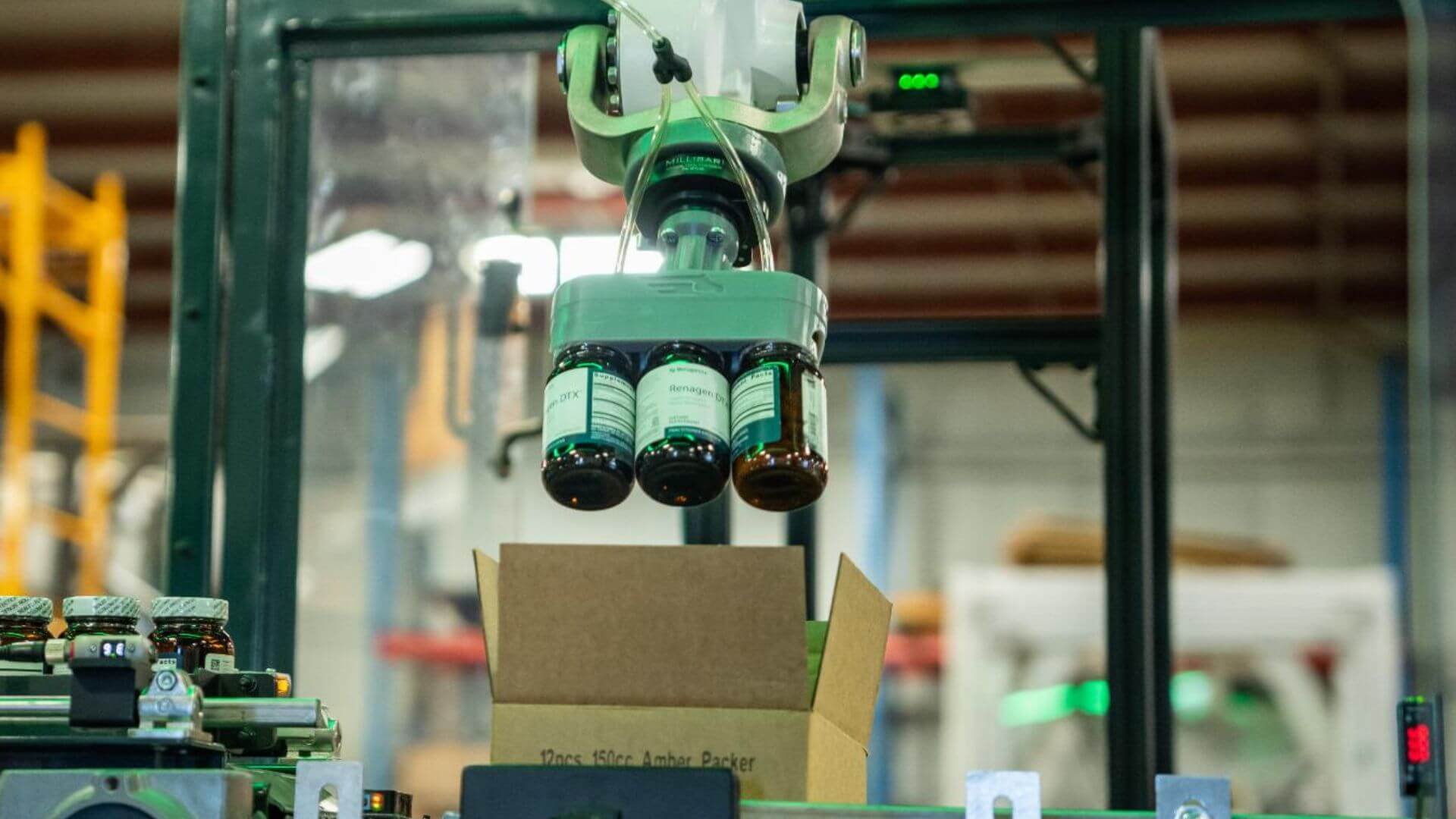
In another application, Byron integrated machine-vision inspection, robotic sorting, and case packing for a bottling line. Inspection and handling became parts of one connected process rather than separate pieces of equipment.
These projects are different, but the underlying question is the same: what has to work together for the operation to reach its goal?
Frequently Asked Questions
Is palletizing considered end-of-line automation?
Yes. Palletizing is one of the most common end-of-line processes, alongside case packing, conveyance, wrapping, labeling, and completed-load handling.
Where should a manufacturer begin automating?
Begin with the process constraining throughput, creating disproportionate labor demands, or preventing the operation from meeting future goals. Evaluate the surrounding steps before selecting equipment.
Can end-of-line automation be added to existing equipment?
Often, but the integrator must evaluate physical interfaces, controls, product flow, available space, equipment condition, safety, and production capacity. Some existing equipment may need modification.
Do you have to automate the entire end of the line?
No. A single process can be automated when it has a clear boundary and the surrounding equipment can support it. The design should still consider future phases and the performance of the whole line.
How do you calculate the ROI of end-of-line automation?
Consider labor, overtime, throughput, uptime, quality, damage, maintenance, and the value of added capacity. Include the complete cost of engineering, equipment, integration, installation, training, and support.
Bring Us the Constraint
Byron combines robotics, machine vision, custom tooling, conveyance, controls, software, and supporting equipment into complete automation systems.
You don’t need to know which machine or robot you need. Bring us the process, the constraint, and the goal. We’ll help you determine what should come next.
Related Resources
Explore our latest articles and videos for insights on smarter, more strategic automation.
Collaborate On Advanced Productivity And Efficiency
Get in touch with one of our experienced engineers to begin the collaboration process.
Website Built By RUSTY GEORGE.