Food Packaging Automation: How to Handle Fragile and Irregular Products
Food products usually don’t behave like perfectly manufactured parts.
They often vary from one piece to the next. They can shift, bend, and overlap.
Food packaging automation can turn all that complexity into a fast, consistent process so you can move more product, reduce repetitive handling, protect product integrity, and adapt as products or packaging change.
Byron Automation got its start solving difficult automation challenges involving fragile and irregular products in produce packing. Today, we integrate robotics, machine vision, custom tooling, conveyance, and controls for complex food-processing and packaging applications.
In this guide, we’ll explain which food-packaging processes can be automated, how the right systems handle product variability, and what it takes to determine the best approach for your operation.
Why Can Food Packaging Be Difficult to Automate?
Many automation systems perform best when products arrive with consistent dimensions, weight, orientation, and spacing. Food and produce applications can introduce far more variation.
A product may be larger, softer, wetter, more fragile, or more irregular than the one before it. Flexible packaging can shift shape as it moves. Products may overlap or arrive randomly on a conveyor. Seasonal or supplier differences can change the range the system needs to handle.
The environment adds another layer. Equipment may need to operate around moisture, dust, cold temperatures, frequent cleaning, or exposed food. Product-contact and non-product-contact applications can also have very different design requirements.
These variables don’t necessarily prevent automation. They determine how carefully the application must be defined and tested.
Which Food-Packaging Processes Can Be Automated?
Food-packaging automation can begin before a product enters its final package and continue through finished-pallet handling.
Common applications include:
- Inspecting and verifying products
- Tracking, orienting, and sorting
- Robotic pick-and-place
- Loading trays or cases
- Conveying and accumulating products
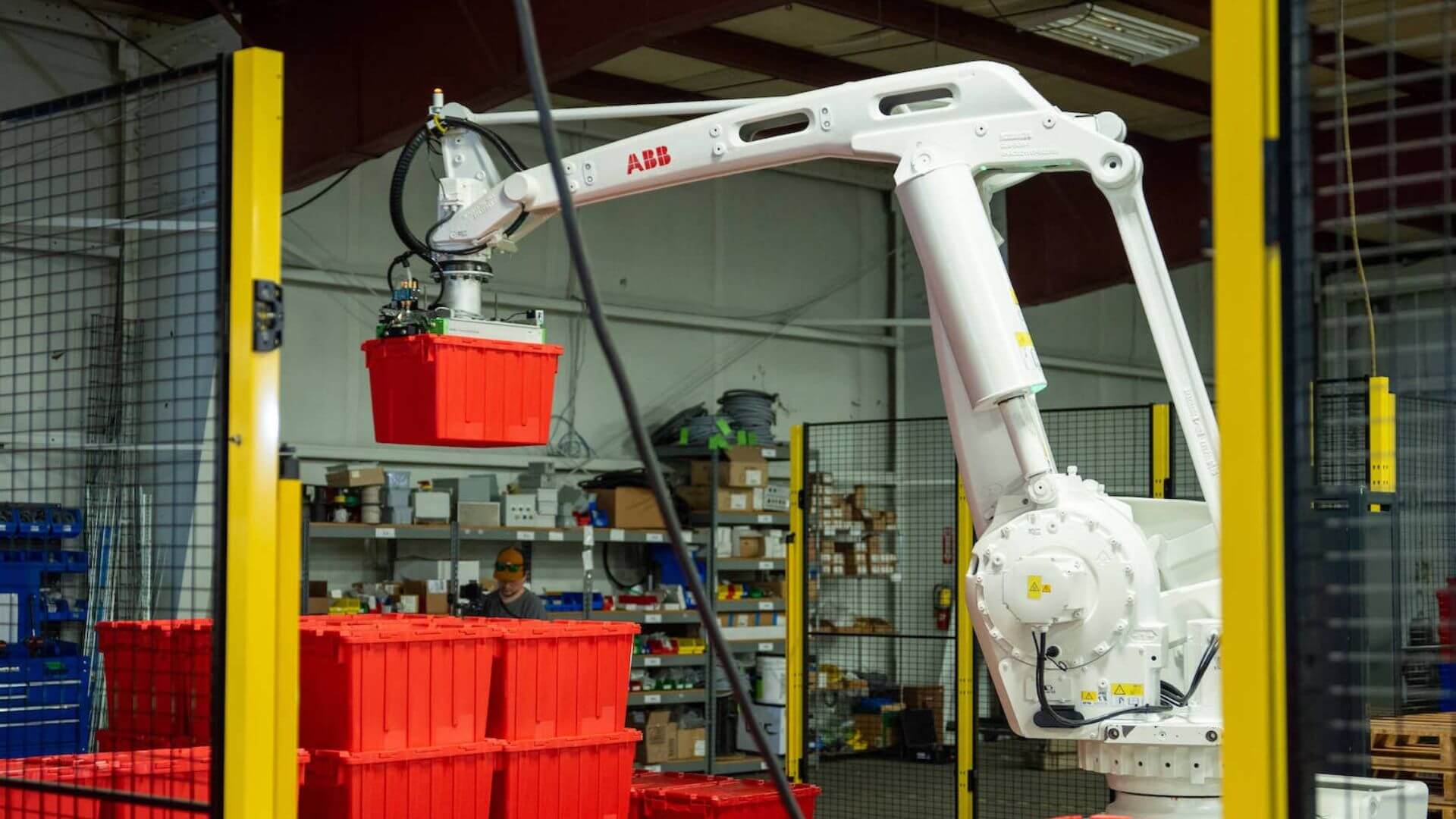
- Palletizing completed packages
A facility may automate one defined task or integrate several processes. The right boundary depends on the constraint, how the surrounding equipment performs, and what the operation needs to accomplish.
How Can Automation Handle Product Variability?
Machine Vision and Sensing
A robot needs to know where the product is and, in some applications, what condition it’s in.
Machine vision can locate products on a moving conveyor, determine orientation, distinguish among product types, or identify defined defects. That information can then guide a robot, activate a reject mechanism, or route the product to the appropriate destination.
The vision system is only as effective as the complete application allows. Lighting, camera placement, conveyor speed, product overlap, visual variation, and the definition of an acceptable product all affect performance.
Robot and Motion Selection
The robot must have the payload, reach, speed, and motion required by the application. But selecting the fastest available robot isn’t always the answer.
A delicate product may require controlled acceleration. A randomly presented product may require time for vision processing and tracking. Several robots may need to divide work from a shared conveyor. The system’s real output depends on all of these actions working together.
The goal is reliable sustained performance, not an isolated peak cycle.
Custom End-of-Arm Tooling
The interface between the robot and the product is often the most application-specific part of the system.
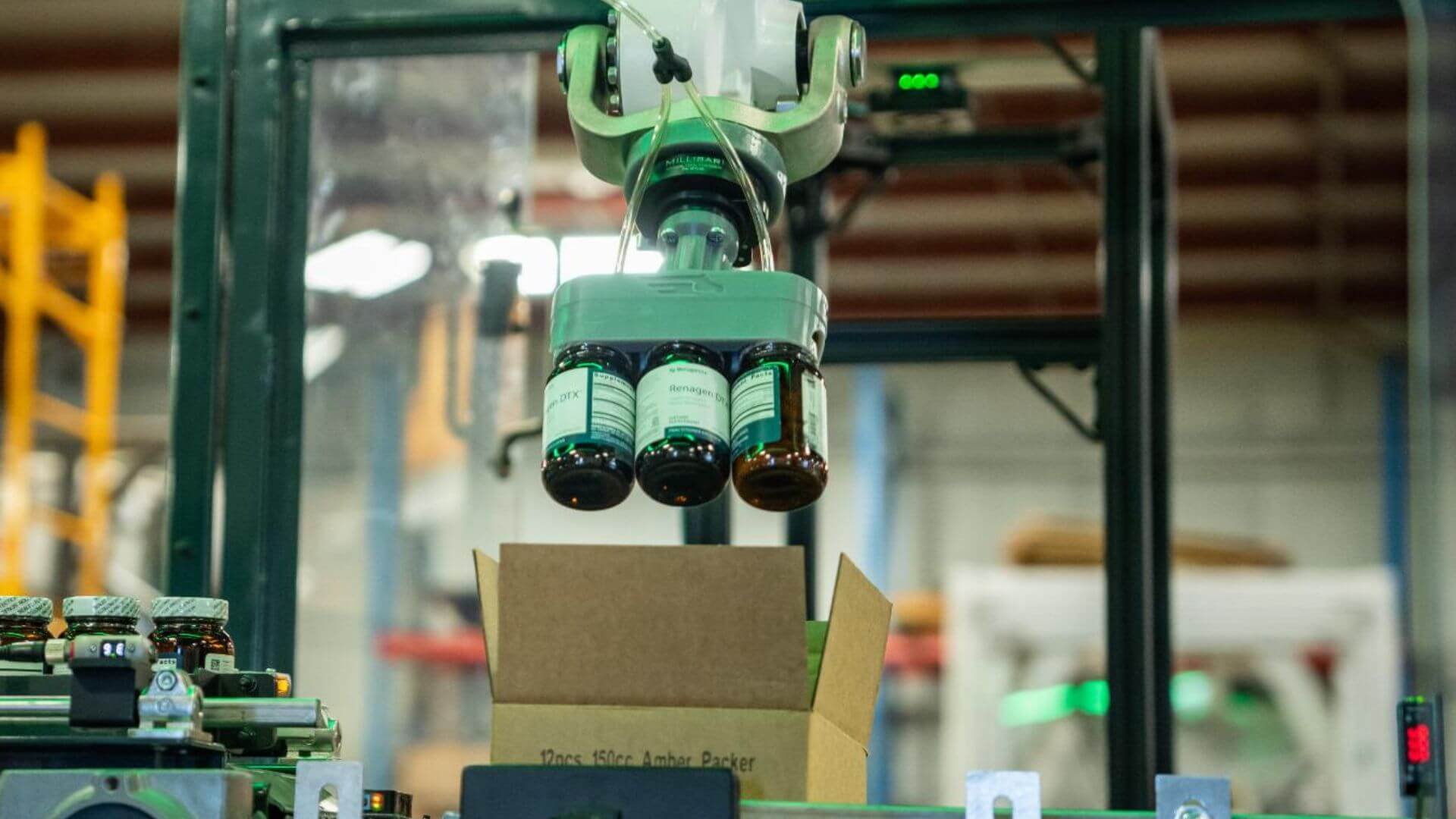
Tooling might use vacuum, soft grippers, mechanical fingers, clamps, scoops, or a custom combination. The best approach depends on the product’s geometry, surface, fragility, weight, presentation, and allowable contact.
Some tools can accommodate a range of product sizes. Others may require adjustable components, multiple gripping zones, or changeable tools. Sensors may be added to confirm that the product has been picked securely before the robot moves.
Conveyor Tracking and Product Flow
Even capable robots and tooling will struggle if products arrive unpredictably in ways the system wasn’t designed to manage.
The engineering team needs to understand spacing, orientation, accumulation, speed changes, and what happens when upstream or downstream equipment stops. The design may need to singulate products, create consistent gaps, buffer flow, or coordinate several robots along one conveyor.
Product flow should be designed as part of the automation—not treated as a separate conveyance problem.
Controls and Fault Recovery
Operators need a clear way to select products, manage changeovers, understand system status, and recover from expected faults.
A system should account for missing products, failed picks, blocked conveyors, rejected items, loss of vacuum, and downstream interruptions. The operator interface and fault-recovery process can significantly affect how well the automation performs during a real production shift.
What Should Be Defined Before Designing the System?
Start with the full range of products the system will encounter, not a single ideal sample.
The integrator needs representative products and packaging materials, including reasonable examples from the edges of the acceptable range. The team should also understand:
- Average, peak, and future production rates
- How products arrive at the proposed automation
- What constitutes unacceptable product damage
- SKU and package-change expectations
- Cleaning procedures and operating conditions
- Existing equipment that must remain
It’s also important to define what the system should do when a product falls outside the acceptable range. It may reject the item, route it elsewhere, alert an operator, or stop the process. That response is part of the required system performance.
Why Is Real-Product Testing So Important?
An early demonstration may show that a robot can pick one product under controlled conditions. It doesn’t prove that the complete system can run through normal production variation at the required rate.
Testing should use representative products and packaging materials. It should cover sustained operation, rate changes, product variation, changeovers, misaligned or missing products, likely fault conditions, and operator recovery.
Byron’s design and testing process includes assembling the system, running it with the client’s production materials, addressing issues uncovered during testing, and completing full-capacity acceptance testing before deployment.
That process is especially valuable when the product itself is one of the largest variables in the application.
How Do Sanitation Requirements Affect the Design?
Food-safety and cleaning requirements depend on the product, process, facility, and whether equipment has food-contact surfaces.
Design questions may include material selection, cleanability, drainage, access, water and chemical exposure, harborage points, and separation between product-contact and non-product-contact areas. The facility’s cleaning procedure and hazard analysis should be understood before components are selected.
The FDA’s Current Good Manufacturing Practices address plant equipment, sanitary operations, and production controls. Specific regulatory and customer requirements should be confirmed for each application rather than assumed from a general equipment category.
What Can Complex Food-Packaging Automation Look Like?
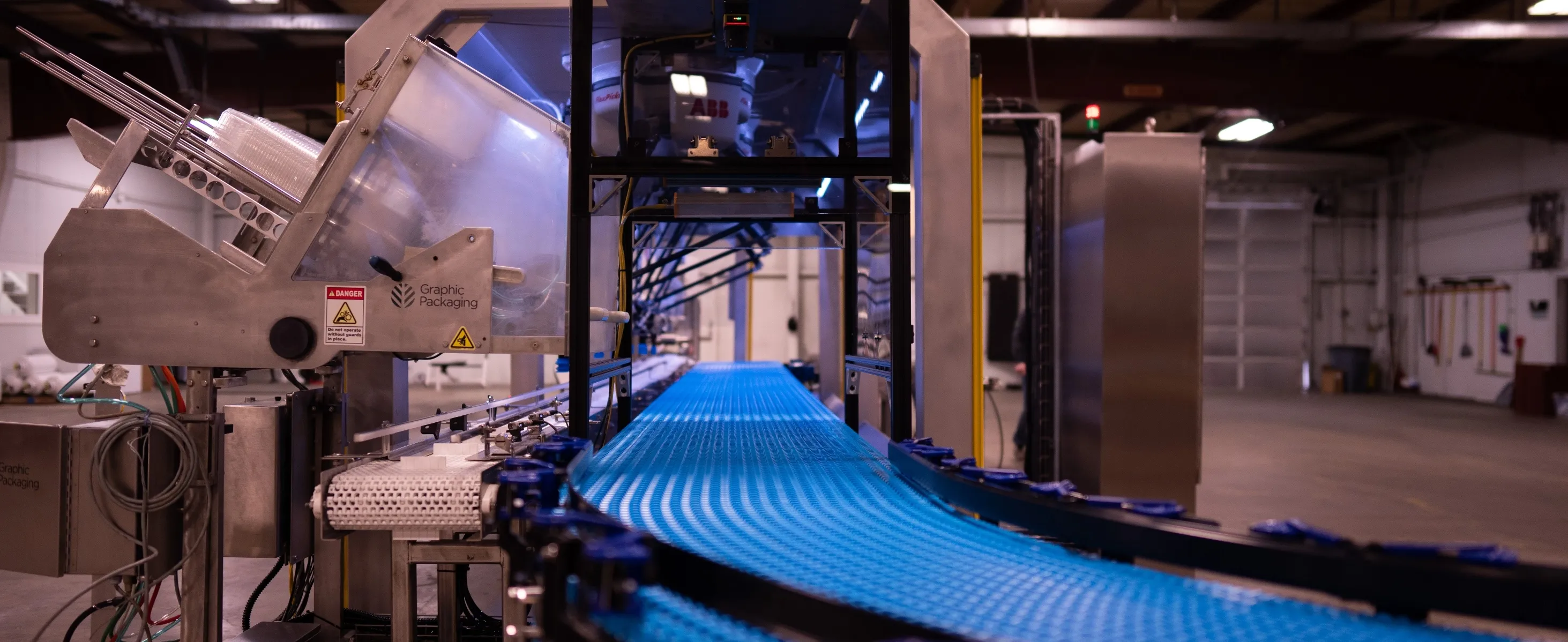
In one robotic food-packing application, Byron integrated vision tracking, robotic alignment, and tray packing for incoming snack pouches. The system had to coordinate the movement of flexible packages with high-speed robotic picking.
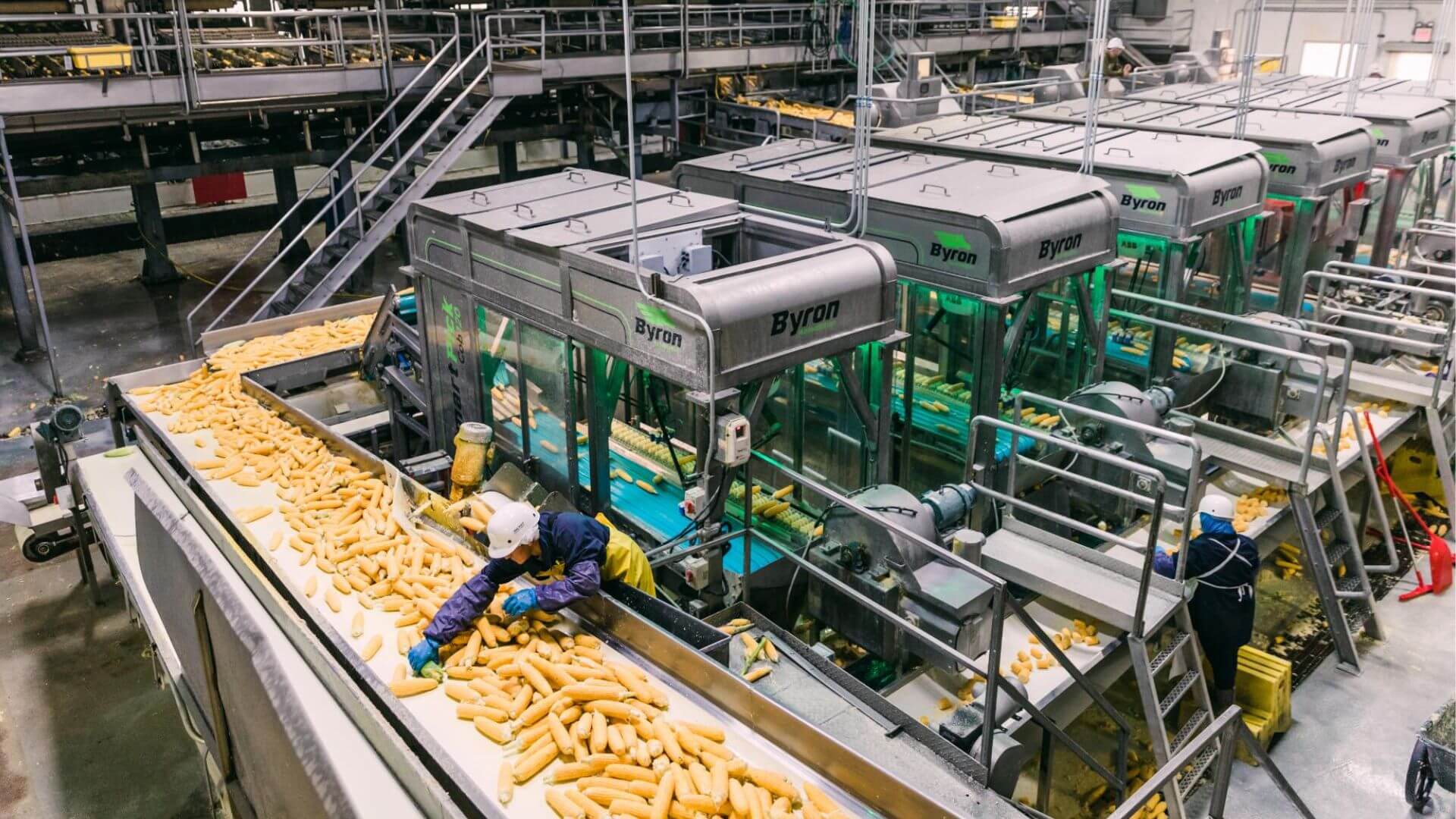
For a produce-handling application, Byron combined vision and robotics to inspect, track, and sort products moving through the line.
Both projects required the system to respond to products in motion rather than simply repeating a fixed movement with a rigid, consistently positioned part.
Frequently Asked Questions
Can robots handle fragile food products?
Potentially. Success depends on the product, allowable contact pressure, motion, tooling, presentation, and required rate. Representative-product testing is necessary to determine whether the system can handle the product reliably.
How is machine vision used in food packaging?
Machine vision can locate, track, inspect, classify, and orient products. It may guide robotic picking, trigger rejection, or route products based on defined characteristics.
What type of gripper is used for food products?
There isn’t one universal gripper. Vacuum, soft, mechanical, or custom tooling may be appropriate depending on the product’s surface, shape, weight, fragility, sanitation requirements, and presentation.
Can food-packaging automation be added to an existing line?
Often, but the integrator must evaluate the existing equipment, controls, conveyor flow, space, operating environment, and available production windows. The surrounding line may need modifications.
Does food-packaging automation have to be washdown rated?
Not always. Requirements depend on the product, location, cleaning procedure, and whether equipment contacts exposed food. The appropriate construction and component ratings must be established for the specific application.
How do you determine whether a food product can be automated?
Begin with representative samples, required production rates, the current process, acceptable product variation, handling limits, cleaning requirements, and facility constraints. Testing can then determine whether a proposed approach is reliable enough to develop further.
Bring Us the Difficult Product
Byron got its start solving automation challenges involving fragile and irregular products in produce packing. Today, our robotics and automation team applies that same curiosity to complex food-processing and packaging applications.
You don’t need to know which robot, vision system, or gripper you need. Bring us the product, the process, and the production goal. Let’s discover what’s possible.
Related Resources
Explore our latest articles and videos for insights on smarter, more strategic automation.
Collaborate On Advanced Productivity And Efficiency
Get in touch with one of our experienced engineers to begin the collaboration process.
Website Built By RUSTY GEORGE.