
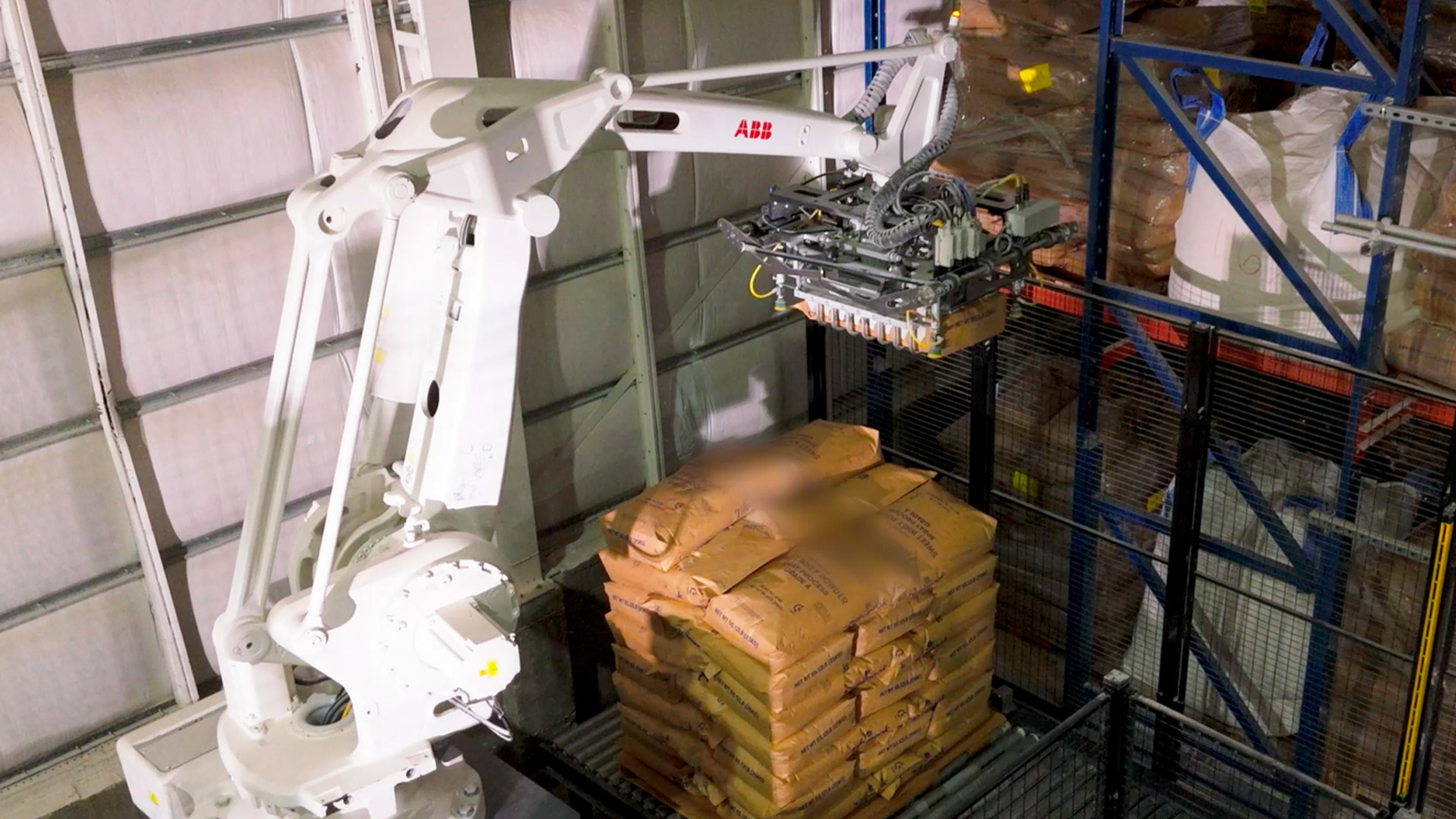
Robotic Palletizer Cost: How to Budget for a Complete System
Before you approve a robotic palletizer budget, make sure it covers everything your line needs to keep moving.
The robot has to handle your products at the required rate. But conveyors, pallet handling, controls, and the surrounding operation all affect whether that happens consistently. Which can also affect what you'll need to invest.
For operations and engineering teams, a useful budget starts with a clear picture of that complete system.
- What will it automate?
- What will operators still handle?
- What needs to change on the existing line?
We've helped companies across product categories and output quantities get cost-effective palletizing systems. From small agricultural processors to national-scale manufacturing and fulfillment operations.
This guide explains robotic palletizer cost, the expenses to include, and how to compare proposals and evaluate payback.
How much does a robotic palletizer cost?
Robotic palletizer cost depends on the system's scope. Here are a few examples to help you get a sense of the budget range.
A simple system can cost as little as $150,000 fully-installed. Meanwhile a six-position palletizer for a distribution warehouses is closer to $350,000. More complex systems with multi-SKU stacking, auto-stretch wrapping, and pallet shuttles can be $800,000 or more, depending on your requirements.
But most systems we install for midsize processors, fulfillment centers, and manufacturers run from $200,000 to $400,000.
It's all about the return on investment target.
Byron designs for a 2-year ROI because they generate healthy positive cash flows for the operation.
Our robotic palletizing systems guide explains how to choose the system that will improve your business.
Or if you want an expert opinion about what will work for you and how much to budget, start the conversation here and we'll be happy to help.
What should a complete-system budget include?
Budget for the equipment and work needed to bring the system into production, plus the costs of operating it. A complete estimate should address six categories:
- Robot and tooling. Include the robot, mounting, and end-of-arm tooling that grips the product. Tool changes or custom gripping arrangements may be needed for different SKUs.
- Product and pallet handling. Account for infeed conveyors, accumulation, empty-pallet supply, slip sheets, completed-pallet removal, and wrapping where required.
- Controls and safeguarding. Include electrical controls, the operator interface, equipment communications, sensors or vision, and the application's required safety measures.
- Engineering and testing. Allow for system design, programming, assembly, representative-product trials, and acceptance testing against agreed performance requirements.
- Delivery and installation. Clarify freight, rigging, utility connections, floor or facility modifications, installation, commissioning, and the production time needed for the changeover.
- Training and ownership costs. Plan for operator and maintenance training, spare parts, service, energy, compressed air where needed, and any ongoing software fees.
Confirm who supplies and pays for each item. Work performed by your facility or another contractor still belongs in the project budget, even when it's outside the integrator's proposal.
If the project includes a larger end-of-line automation system, define where that scope begins and ends before comparing costs.
What drives the price up?
The main cost drivers are the handling task, required throughput, product variation, and how much equipment must work together.
Product and tooling requirements
A rigid case with a consistent surface presents a different gripping challenge from a porous bag, flexible package, or open tray. Product weight, tool weight, allowable gripping pressure, and handling motion influence robot selection and tooling development.
Throughput and SKU mix
Higher production requirements may call for multiple picks per cycle, layer handling, additional accumulation, or more robots. Frequent SKU changes add requirements for recipes, tooling, and changeover procedures.
Evaluate sustained system output, including pallet exchanges and interruptions. A robot's peak pick rate alone won't tell you whether the line can meet its target.
Number of lines and pallet positions
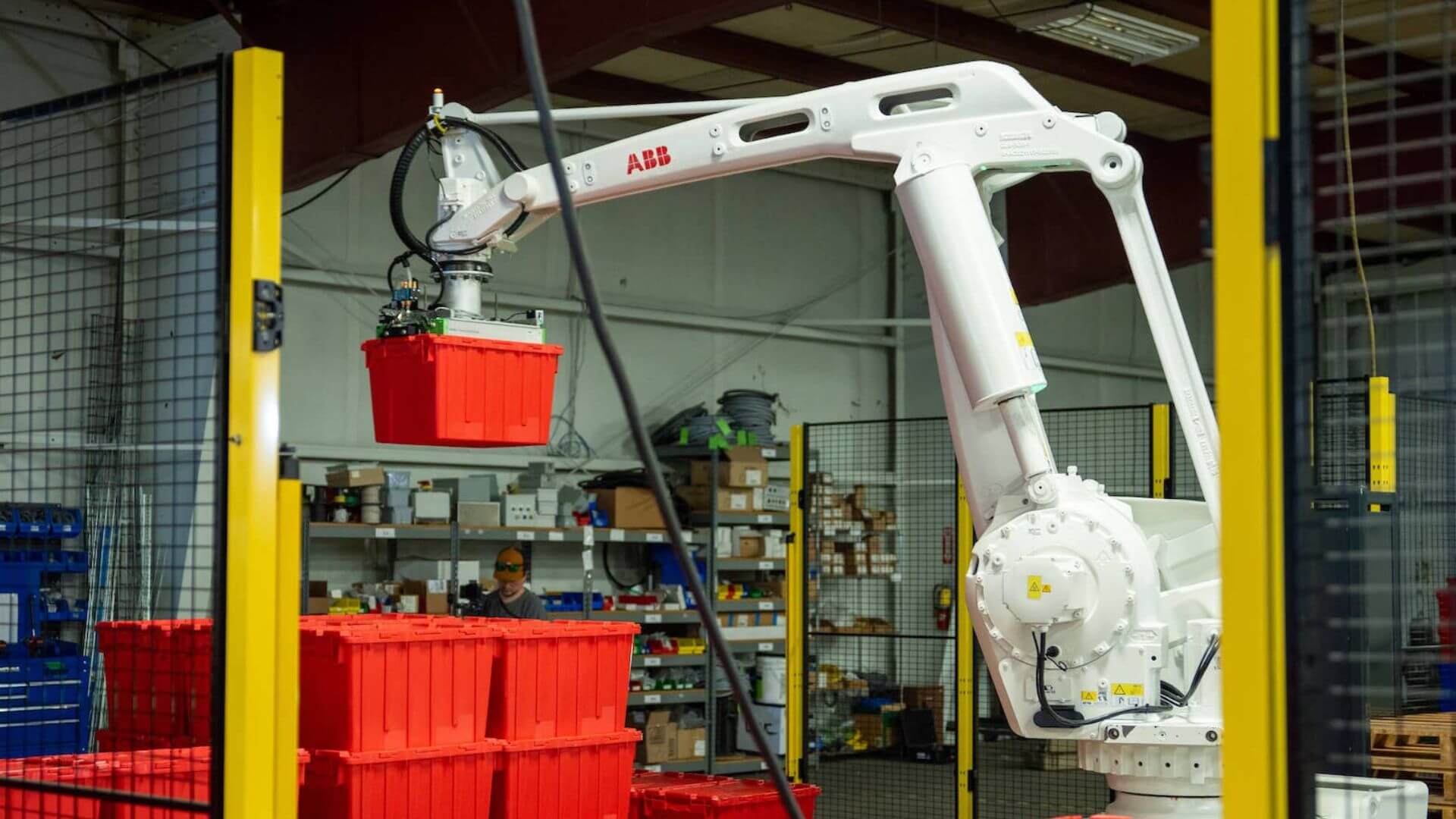
More infeed lines and pallet destinations introduce additional routing and coordination requirements. For example, Byron's six-position robotic palletizing system handles logistics totes within an existing fulfillment operation. That scope involves different design decisions from a cell stacking one consistent case at one destination.
Existing equipment and available space
Retrofitting requires attention to conveyor flow, controls, maintenance access, safeguarding, and pallet removal. A compact layout may require additional engineering to accommodate these needs. Existing equipment can be useful, but its suitability needs to be checked.
How should you compare palletizing quotes?
Compare proposals against the same operating requirements and scope. A lower price may reflect fewer automated tasks, different performance assumptions, or more work assigned to your team.
Ask each integrator to explain:
- Which products, SKUs, and pallet patterns the system will handle.
- The sustained rate, operating conditions, and changeover assumptions.
- Which tasks remain manual and what staffing is required.
- What's included in installation, commissioning, and training.
- How performance will be tested and accepted.
- What maintenance, support, and recurring fees you should expect.
Testing deserves particular attention when products vary or several machines must coordinate. Confirm that trials will use representative products and include conditions such as pallet exchanges, failed picks, and upstream or downstream stops.
Byron's design and testing process includes live-product validation, corrections, and full-capacity acceptance testing before deployment. Define acceptance criteria early so both teams know what the system must demonstrate.
How do you calculate palletizing payback?
Simple payback compares the total installed investment with the net cash benefit the system is expected to generate. Divide installed cost by annual net cash benefit, then multiply by 12 to estimate payback in months.
Annual net benefit may include:
- Realizable labor and overtime savings
- Reduced damage
- Additional saleable output
Then subtract incremental operating costs including maintenance, energy, and support.
Be careful with labor assumptions. Moving employees to another task can increase capacity, but it doesn't automatically reduce payroll. Document how each benefit will occur. Likewise, use the contribution from additional output after variable costs, rather than treating all added revenue as a benefit.
Once you have a solid annual net benefit number, the calculation is simple.
For example, a $600,000 installed investment generating $200,000 in annual net cash benefit has a simple payback of 36 months.
Build the business case around your operating schedule, including seasonal peaks and startup. Your finance team can then evaluate cash-flow timing and the company's capital approval requirements.
What information do you need for an estimate?
You don't need a finished engineering specification to start the conversation. Gather enough information to explain the application:
- Product samples, dimensions, weights, and packaging materials.
- Current, peak, and anticipated future production rates.
- SKU mix, pallet sizes, patterns, and changeover frequency.
- A layout showing space, access, conveyors, and pallet movement.
- Existing equipment and available controls documentation.
- Operating hours, current staffing, production problems, and project goals.
Include operations and maintenance staff early. They can explain where products accumulate, how faults are recovered, and what access the team will need after installation.
Frequently asked questions
Does a palletizer quote include installation and commissioning?
Check the proposal. Confirm responsibility for freight, rigging, utilities, site preparation, installation, commissioning, and training. Each cost needs an owner, whether the work is included in the supplier's scope or handled separately.
What ongoing costs should you budget for?
Allow for maintenance, replacement parts, energy, compressed air where applicable, training, and support. Ask whether software licenses, updates, or future programming changes carry additional fees.
Can you use existing conveyors with a new robotic palletizer?
Often, but they must support the required product presentation, spacing, accumulation, and throughput. The integrator also needs to assess controls, safety, and mechanical interfaces. Modifications may be necessary.
Build the budget around your operation
The right investment depends on what the system needs to accomplish in your facility.
Byron's automation integration team brings robotics, tooling, conveyors, controls, and supporting equipment together around that requirement. Bring us your product, process, and production goal. Contact Byron Automation to discuss the scope of a palletizing system for your operation.
Related Resources
Explore our latest articles and videos for insights on smarter, more strategic automation.
Collaborate On Advanced Productivity And Efficiency
Get in touch with one of our experienced engineers to begin the collaboration process.

Website Built By RUSTY GEORGE.